Build a More Secure,
Consistent Azure Foundation.
Visus helps organizations assess, architect, automate, modernize, and support Azure environments so applications and data platforms can run on a more secure, governed, and scalable cloud foundation. Infrastructure automation. Azure governance. DevOps. Ongoing optimization.










 Microsoft Azure
 Bicep
BicepManual cloud configuration creates unnecessary risk
Azure environments often begin simply and become more complex over time.
When environments are created or changed manually, differences can accumulate between Development, QA, UAT, and Production. A setting may be missed. A security control may be applied in one environment but not another. Infrastructure can begin to drift from the standards the organization originally intended.
That creates operational risk and makes environments harder to reproduce, troubleshoot, and maintain.
Visus helps reduce that risk through standardized Azure architecture, repeatable deployment practices, and infrastructure automation.

The warning signs usually appear
before a major failure
Your Azure environment may need attention if:
Four capabilities.
One stronger Azure foundation.
Create Environments More Consistently
Visus helps organizations reduce the risk of manual cloud configuration by standardizing how Azure environments are created and maintained.
Infrastructure can be defined through repeatable deployment practices so the same architecture, configuration standards, and security controls can be applied consistently across the software development lifecycle (SDLC).
This is especially valuable when an organization needs structured Development, QA, UAT, and Production environments that should follow the same underlying design while still allowing appropriate environment-specific configuration.
Infrastructure as Code
Instead of manually configuring each Azure environment, infrastructure can be defined in code so the same standards, settings, and controls are applied consistently every time. Visus has used Bicep to automate Azure environment creation and reduce configuration drift and manual setup errors.
What Infrastructure Automation Changes
- Fewer manual setup steps
- More consistent configuration across environments
- More consistent security controls
- Less configuration drift
- Easier recreation of environments
- More repeatable deployments
- Better documentation of how infrastructure is defined
- Less dependence on individual knowledge
Keep the Environment Controlled as It Grows
Azure governance means establishing consistent standards around how cloud resources are created, accessed, configured, and managed.
Visus helps organizations put practical controls in place so the environment remains organized and manageable as more applications, teams, and workloads are added.
That can include:
- Role-based access and least-privilege permissions
- Clear access boundaries between environments
- Privileged access controls
- Consistent resource naming and tagging
- Policy-driven standards
- Secure handling of secrets and credentials
- Use of managed identities where appropriate
- Reducing sensitive information stored in application configuration
- Consistent resource organization
- Clearer visibility into ownership and cost
Secure Configuration and Secrets Management
Passwords, connection information, and other sensitive configuration should not be scattered through code, scripts, or application configuration files. Visus can use Azure-native approaches such as secure secrets management and managed identities to help reduce unnecessary exposure and create more consistent security practices across environments.
Create a Better Foundation for the SDLC
Modern application development depends on more than good code.
Development teams need cloud environments that are structured consistently, support repeatable deployment, and make it easier to move changes safely from Development to QA to UAT to Production.
Visus helps organizations establish Azure environments and deployment practices that support a more disciplined software delivery process.
That can include:
- Consistent environments across the SDLC
- Automated deployment practices
- CI/CD support
- Controlled progression between environments
- Approval steps where appropriate
- Separate infrastructure and application deployment processes
- Reduced dependence on manual deployment steps
- Better coordination between application and infrastructure changes
Keep the Cloud Foundation Aligned With the Business
Azure infrastructure should evolve as the workloads running on it evolve.
Applications change. Data platforms grow. AI workloads are introduced. New users, environments, and services are added. Costs shift over time.
For Azure environments Visus helps architect, modernize, or support, we can continue working with clients to improve the environment as business and technology needs change.
Ongoing support can include:
- Monitoring and operational visibility
- Infrastructure optimization
- Governance refinement
- Environment consistency reviews
- Cost visibility and right-sizing
- Resource tagging and organization
- Support for changing application needs
- Infrastructure updates required by modernization
- Support for new data and AI workloads
- Continued improvement of deployment practices
Your cloud environment should make modern technology
easier to build and support
If Azure environments are being configured manually, deployment depends too heavily on individual knowledge, or the cloud environment has grown without consistent standards, Visus can help.
We can help assess, architect, automate, modernize, and support Azure infrastructure so your applications, data platforms, and AI workloads have a stronger foundation underneath them.
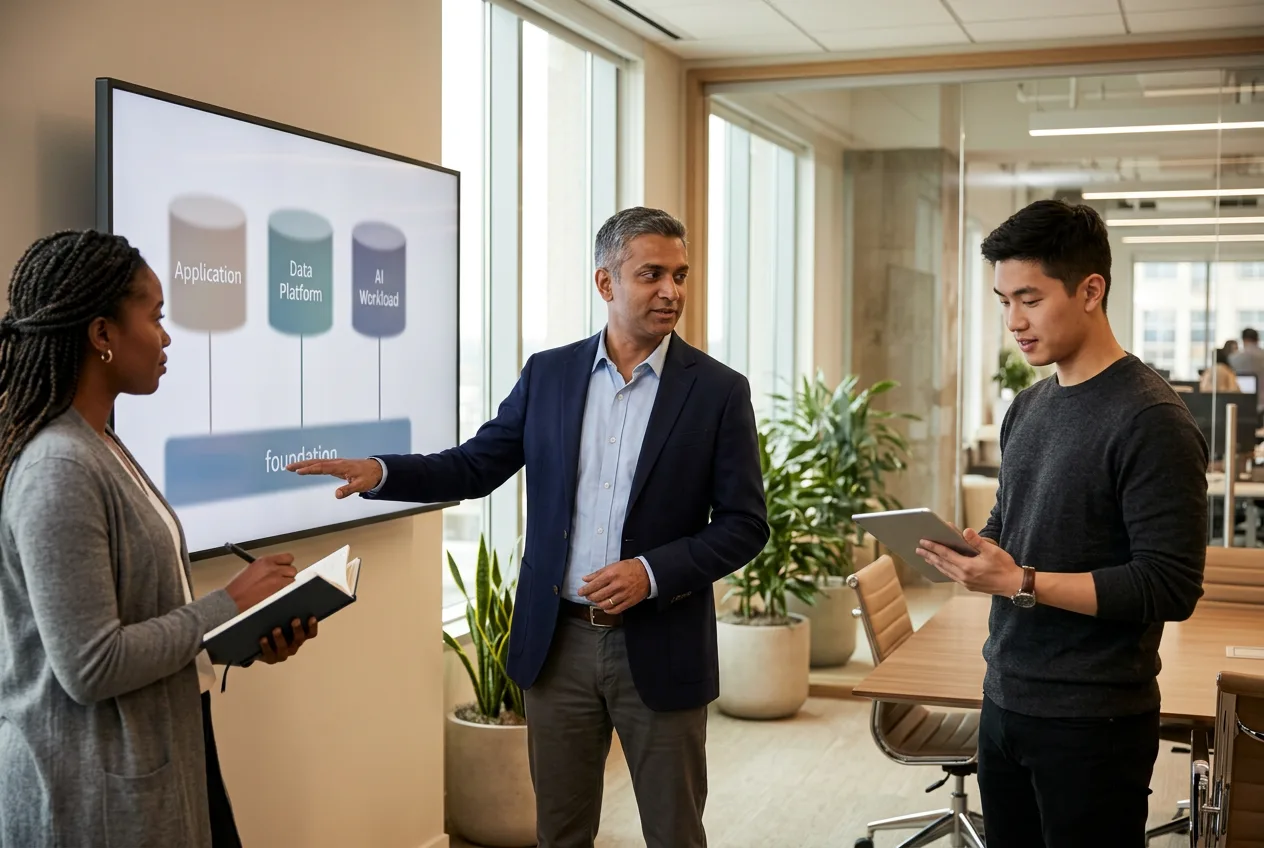
The workload is only as dependable as the foundation underneath it
Modern applications depend on more than application code.
They also need secure environments, repeatable deployment, controlled access, monitoring, and infrastructure that can evolve with the workload.
The same applies to data platforms and AI solutions.
A well-designed Azure foundation can help organizations:
- Support modern application development
- Create consistent environments across the SDLC
- Deploy applications more reliably
- Provide a stronger foundation for data platforms and analytics
- Support AI workloads with appropriate controls
- Reduce deployment and configuration risk
- Improve operational visibility
- Scale infrastructure as business needs change
- Make applications and platforms easier to support over time
That is why Visus approaches Azure infrastructure as part of the broader technology environment, not as isolated cloud plumbing.
Starting points for existing Azure environments
Not every Azure engagement begins with a new environment. Organizations that already have Azure may need help understanding where inconsistencies, technical debt, cost issues, or operational gaps have accumulated.
Visus can review an existing Azure environment and identify opportunities to improve:
- Architecture and environment consistency
- Governance and access standards
- Deployment practices
- Monitoring and operational visibility
- Resource organization and tagging
- Cost visibility and optimization
- Modernization opportunities
The goal is not assessment for its own sake. It is to identify the improvements that will have the greatest practical value and help implement them.
When an application or infrastructure environment needs to move into Azure, Visus can support the migration as part of a broader modernization effort.
That can include planning the target Azure environment, establishing appropriate architecture and controls, supporting deployment, and helping create a cloud foundation that is easier to maintain after migration.
Migration is not treated as a standalone goal. The objective is to improve the environment the workload will depend on once it reaches Azure.
The difference should be visible in how the environment is operated
Manual, inconsistent Azure
- Azure environments created manually
- Dev, QA, UAT, and Production configured inconsistently
- Security controls applied differently between environments
- Configuration drift over time
- Deployments dependent on individual knowledge
- Too many manual deployment steps
- Limited operational visibility
- Cloud costs that are difficult to understand
- Infrastructure changes that are difficult to reproduce
- Application teams slowed down by environment inconsistency
Standardized, scalable Azure
- Standardized Azure environments
- More repeatable infrastructure deployment
- More consistent governance and access controls
- Reduced configuration drift
- Better documentation of infrastructure
- More reliable progression through the SDLC
- Improved monitoring and visibility
- Greater cost transparency
- A more scalable cloud foundation
- Infrastructure that can evolve with modern applications, data, and AI
Improve Azure with the right combination
of architecture, automation, and ongoing support
Start With the Workloads and the Environment
We begin by understanding what the Azure environment needs to support: applications, data platforms, AI workloads, development teams, and operational requirements. For existing environments, we also look at where inconsistency, manual effort, deployment risk, or cost issues may exist.
Establish the Right Cloud Foundation
Visus designs or refines the Azure structure, access standards, environment model, governance practices, and deployment approach required to support the workload. Where appropriate, infrastructure automation and Infrastructure as Code can be introduced to make the environment more repeatable.
Put the Foundation Into Practice
We help implement Azure environments and support modern deployment practices so application and infrastructure changes can move through the SDLC more consistently.
Keep Improving the Environment
As workloads and business needs evolve, Visus can continue helping improve monitoring, governance, cost, infrastructure consistency, and support for new applications, data platforms, and AI workloads.
Infrastructure expertise
with an application mindset
Visus understands the full technology stack, from Azure infrastructure and DevOps to custom applications, data platforms, and AI.
That matters because infrastructure decisions affect how applications are developed, deployed, secured, monitored, and supported.
Our broader experience allows us to design Azure environments around the workloads they actually need to support rather than treating infrastructure as a separate technical layer.
Visus brings together:
- Azure infrastructure architecture and automation
- Modern .NET and application development experience
- Data & Analytics expertise
- AI solution experience
- DevOps and deployment practices
- Ongoing application and infrastructure support
Visus holds the Microsoft Solutions Partner designation for Infrastructure (Azure), alongside Data & AI (Azure) and Digital & App Innovation (Azure). That combination gives clients a partner that can connect the infrastructure foundation to the applications, data platforms, and AI solutions running on top of it.

Better infrastructure reduces risk and creates
a stronger technology foundation
More Secure, Governed Azure Environments
Create clearer standards for access, configuration, secrets, resource organization, and cloud management.
Greater Consistency Across the SDLC
Support Development, QA, UAT, and Production with more consistent environments and deployment practices.
Reduced Risk From Manual Configuration
Use automation and repeatable infrastructure practices to reduce setup errors, configuration drift, and dependence on individual knowledge.
A More Scalable, Maintainable Cloud Foundation
Build Azure infrastructure that can evolve as applications, data platforms, AI workloads, and business needs change.
Client success stories

Going for Gold: How Visus Helped USA Swimming Scale Seamlessly for Millions of Website Visitors During the Paris Olympics
During the 2024 Olympic Trials and Games, USA Swimming's website handled record traffic from millions of visitors, without a single crash or a moment of slowdown.
View Success Story →Application Modernization - Historical Index Web Application
Visus modernized Santa Barbara County's aging records system into a secure, searchable Microsoft Azure web application, giving the public direct access to 83,000 historical documents.
View Success Story →From Paper to Digital Efficiency: How Visus Led the Digital Transformation of Santa Barbara County Surveyor's Office
Visus built the Surveyor Digital Intake and Review System (DIRS), moving Santa Barbara County's paper-based map submissions to a fully digital Azure platform with online payments and instant review cycles.
View Success Story →
Build the cloud foundation
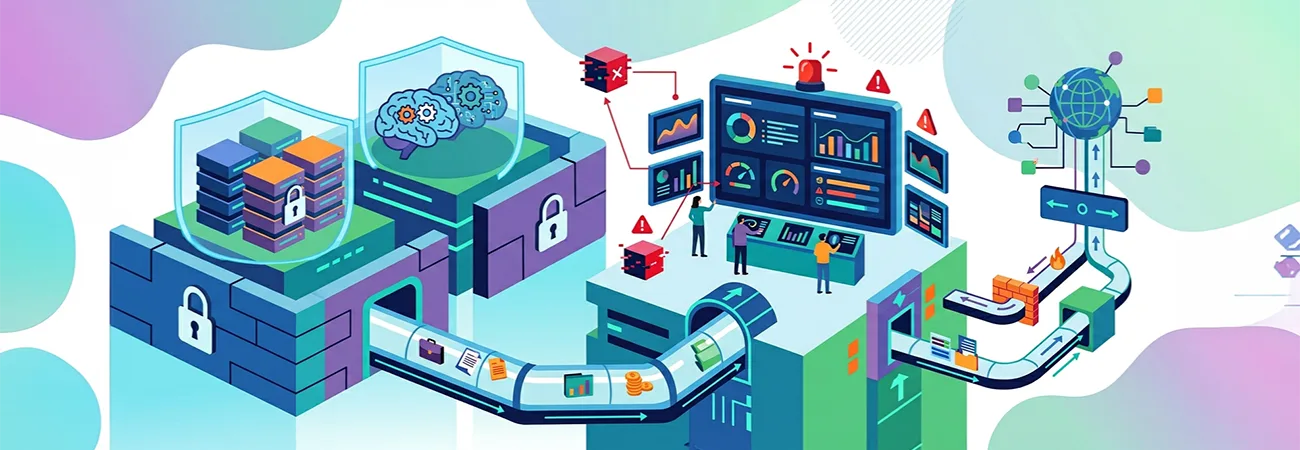
your technology depends on
Modern applications, data platforms, and AI solutions need more than good software. They need a cloud environment that is secure, consistent, repeatable, and ready to evolve. Visus can help you improve the Azure foundation underneath your technology, whether you are building new environments, modernizing an existing one, reducing manual configuration risk, or preparing Azure to support new workloads.
Let's Talk