Discover how Visus used AI agents to connect software knowledge scattered across source code, application behavior, and Jira history. Learn how this approach creates reliable, structured documentation that helps Customer Support find answers faster, improves onboarding, and builds a foundation for AI-powered assistance.
For organizations managing complex software platforms, understanding how a feature works can require more than reading documentation. Business rules, application behavior, and historical development decisions often exist across multiple systems, making it difficult for support teams to find accurate answers quickly.
Visus helped a client explore how AI agents could connect these different sources of information and transform existing software knowledge into structured documentation that supports Customer Support, developer onboarding, and future AI-powered assistance.
Understanding a Complex Software Platform
The client operated a feature-rich SaaS platform that supported complex business workflows, user permissions, automated processes, and integrations with external systems.
Over multiple development cycles, the platform accumulated sophisticated functionality and business rules. However, not all of that knowledge existed in centralized, up-to-date documentation.
Understanding how a particular feature worked often required developers or support teams to investigate several sources of information. Some answers existed in the source code. Others appeared in Jira tickets, historical implementation decisions, or the application's actual behavior.
This created several challenges for the organization.
Customer Support frequently depended on developers to explain application functionality. New team members needed significant time to understand existing features and business rules. Documentation could become outdated as the application evolved, while recurring questions required teams to repeat technical investigations.
The challenge was not a lack of information. The information already existed, but it remained scattered across different systems and formats.
Connecting Software Knowledge Across Multiple Sources
Traditional documentation approaches rely on people manually exploring applications, interviewing developers, reviewing existing materials, and writing explanations.
For a complex, evolving SaaS platform, this process can become time-consuming and difficult to maintain.
Simply asking an AI model to analyze the source code did not provide the complete picture.
Source code could explain how developers implemented a feature, but it could not always reveal the complete user experience, configuration-dependent behavior, or the business reasoning behind an implementation decision.
Application exploration provided another perspective. Interacting with the software revealed how features behaved from a user's point of view, but it did not necessarily explain the underlying logic.
Meanwhile, Jira preserved valuable historical context, including feature requests, reported issues, and discussions surrounding previous development decisions.
Each source contained important information, but no single source provided a complete understanding of the application.
The opportunity was to connect these perspectives through AI while maintaining clear distinctions between observed behavior, code-confirmed logic, and historical context.
How Visus Used AI Agents to Discover and Document Software Knowledge
Visus implemented an AI-assisted documentation workflow that combined source code analysis, application exploration, and project history analysis.
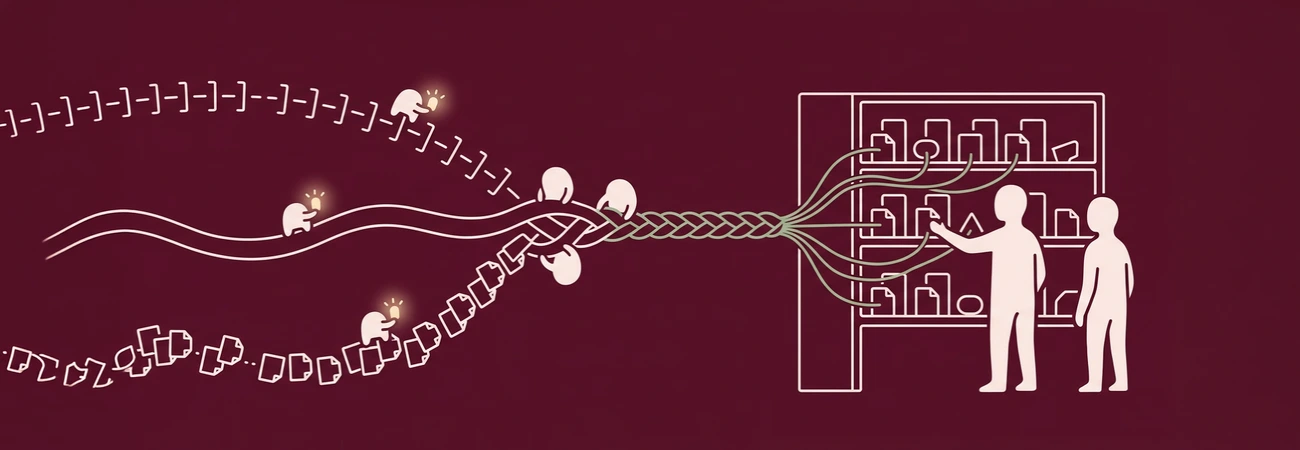
Rather than relying on a single AI tool, the approach brought together complementary techniques to create a more complete understanding of the software.
Analyzing Source Code and Business Rules
AI-powered code documentation tools analyzed the application's backend and frontend projects.
The analysis identified features, business rules, permissions, internal workflows, and relationships between different parts of the application.
This provided a technical foundation for understanding how the platform implemented its functionality and how different components interacted.
Exploring the Application Through AI Agents
AI agents interacted with the running application to investigate features from a user's perspective.
The agents navigated workflows, inspected forms and validations, and captured evidence of how different features behaved.
This application exploration helped identify practical details that source code analysis alone could not fully establish.
By examining the actual user experience, the process provided additional context about how users interacted with the platform and what happened during specific workflows.
Reviewing Historical Development Decisions
Jira provided another important source of information.
The analysis incorporated historical enhancements, reported issues, feature requests, and implementation discussions.
This helped connect current functionality with the decisions and changes that shaped the application over time.
Combining project history with source code and application behavior created a more complete understanding of existing features.
Consolidating Findings into Structured Documentation
Visus brought the findings together into structured, feature-oriented documentation.
The documentation organized information around application functionality and presented explanations that both technical and nontechnical audiences could understand.
An important part of the process involved distinguishing verified application behavior from code-confirmed logic and historical context.
This distinction helped establish a more reliable knowledge foundation that teams could reference when investigating questions about existing functionality.
Building a Foundation for Better Customer Support
The approach demonstrated how organizations could transform fragmented software knowledge into structured documentation with traceable evidence.
Instead of relying exclusively on developers' personal knowledge, teams could reference documented workflows, validated business rules, and historical context when investigating application behavior.
This created several opportunities to improve how the organization managed software knowledge.
Faster investigations: Support teams could reference existing documentation to understand features and investigate recurring questions without repeatedly recreating technical research.
More consistent explanations: Structured documentation helped teams communicate complex business rules and application behavior more consistently.
Improved onboarding: New developers and support team members could access organized information about existing functionality, reducing their dependence on individual developers for explanations.
Reusable knowledge: Documented workflows and verified information created a foundation for future AI-powered assistants that could help teams retrieve relevant software knowledge.
Reduced dependency on developers: Support teams gained access to information that previously required technical investigation, allowing developers to focus more of their time on development work.
Rather than treating documentation as a separate manual task, the process incorporated AI-assisted knowledge discovery into the software engineering workflow.
Turning Documentation into a Continuous Engineering Asset
The project demonstrated an important opportunity for organizations maintaining complex software platforms.
The most valuable knowledge about a software product rarely exists in one place.
Source code describes implementation. Running applications reveal actual behavior. Issue trackers preserve the history behind development decisions.
Each source provides a different perspective, and connecting those perspectives creates a more complete understanding of the software.
AI agents can help organizations discover, organize, and connect this information. However, reliable documentation still requires verification, supporting evidence, and human oversight.
For Customer Support teams, this creates an opportunity to move beyond repeatedly asking developers to explain existing functionality.
For development teams, it provides a more accessible knowledge foundation that supports onboarding, maintenance, and future enhancements.
For organizations exploring AI-powered support, it creates a foundation for assistants that can retrieve information from documented application behavior and established business rules.
Making Existing Software Knowledge More Accessible
The real value of AI-assisted documentation is not simply generating more content.
It is making existing organizational knowledge easier to discover, verify, maintain, and reuse.
By combining source code analysis, application exploration, and historical project information, Visus demonstrated how AI agents could help transform fragmented software knowledge into a structured engineering asset.
For organizations managing complex SaaS platforms, this approach offers a practical way to improve documentation, support team independence, and knowledge sharing while preparing for more effective AI-assisted Customer Support.
The result is a foundation that helps teams spend less time searching for answers and more time delivering value to customers.