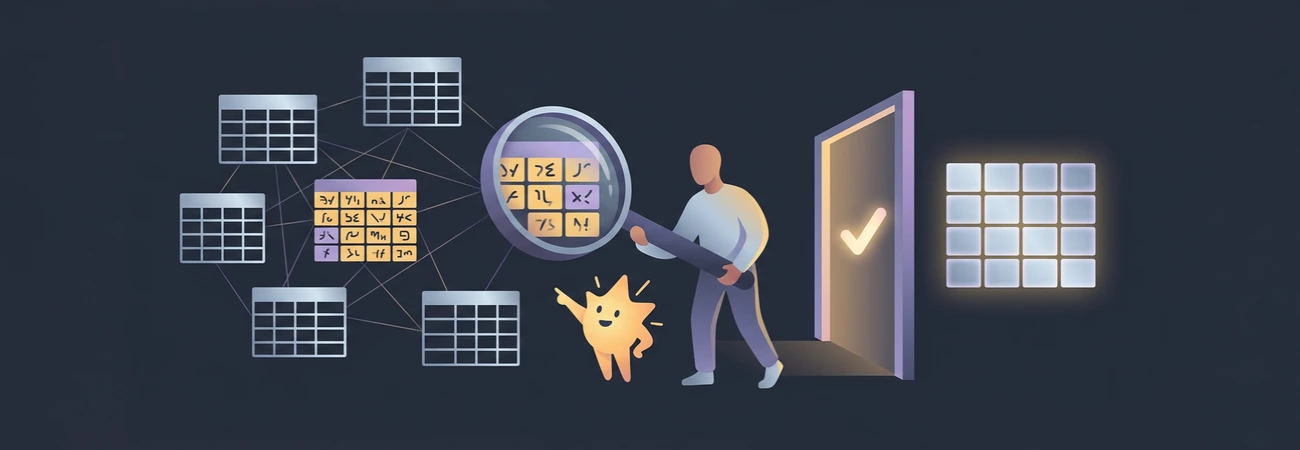
Explore how AI-assisted development can help investigate legacy data issues, analyze database structures, and prepare targeted SQL remediation scripts. See how combining AI-driven analysis with developer oversight, validation, and controlled execution helps resolve data-quality challenges while protecting critical business information.
Legacy data issues can affect how users interact with an application, even when the underlying system continues to function. For one SaaS provider serving community-based and nonprofit organizations, incorrectly displayed text created inconsistencies across existing records and reduced the readability of important information.
The challenge involved more than correcting how the application displayed text. The team also needed to investigate historical database records, identify affected fields, and develop a safe approach to correcting existing data without introducing additional issues.
Visus used AI-assisted development to accelerate the investigation, analyze database structures, and prepare targeted remediation scripts while keeping developers in control of every proposed change.
Identifying the Source of Legacy Data Issues
The client provided a specialized management platform that helped community-based and nonprofit organizations manage member information, organizational records, events, tasks, and other operational data.
Over time, certain text fields began displaying HTML-encoded characters instead of their intended characters. These inconsistencies affected the readability of information within the application and created discrepancies across existing records.
Correcting the issue required investigating both application behavior and historical database content. The application contained multiple interconnected tables, with information originating from different application processes and external integrations.
A broad text replacement could potentially modify legitimate special characters or introduce unintended changes to unrelated records. The team needed to understand where the encoding issues originated, which fields contained affected values, and how to correct them without compromising existing data.
Using AI to Accelerate Application and Database Investigation
Visus used Codex to assist with source-code investigation, database schema analysis, and the preparation of SQL scripts for identifying potentially affected records.
Rather than treating the issue as a single database cleanup task, the team separated the work into two areas: preventing new display issues and investigating historical data that required remediation.
On the application side, Visus introduced a lightweight, reusable text-normalization helper using built-in .NET functionality. The helper decoded HTML entities where appropriate, providing a consistent approach instead of introducing separate fixes throughout the application.
For existing records, AI-assisted analysis helped developers explore the database structure, identify candidate text fields, and prepare diagnostic SQL queries to locate potentially affected values.
This approach allowed the team to investigate the issue more systematically before considering changes to production data.
Preparing a Controlled Database Remediation Approach
Correcting historical data required additional safeguards. Because the application relied on interconnected database tables, every proposed modification needed careful consideration.
Visus used AI to help prepare targeted SQL scripts and organize the remediation process into distinct stages:
- Source-Code Analysis: Investigated where encoded text entered the application and how the system processed and displayed it.
- Application-Level Correction: Introduced a reusable normalization helper to address the underlying display behavior.
- Database Investigation: Reviewed database structures and identified candidate fields containing HTML-encoded values.
- Diagnostic SQL Generation: Prepared queries to inspect potentially affected records before modifying existing data.
- Remediation Planning: Developed separate correction scripts with safeguards and opportunities for developer review.
- Risk Assessment: Considered data relationships, unintended replacements, transaction safety, and production execution controls.
AI helped accelerate the investigation and script preparation, but developers retained responsibility for reviewing the generated queries, validating the proposed changes, and authorizing any database modifications.
Separating diagnostic queries from corrective scripts also ensured that identifying affected records did not automatically trigger changes to historical data.
Improving Legacy Data Maintenance with AI-Assisted Development
The work produced a lightweight application-level normalization approach and a structured plan for identifying and correcting existing data-quality issues.
By addressing application behavior separately from historical database records, Visus established a more controlled approach to resolving the problem. The application-level improvement addressed how encoded text was handled, while the database investigation provided a foundation for reviewing and correcting affected records through a deliberate process.
The investigation also demonstrated how AI could help developers understand unfamiliar database structures, explore relationships between tables, and prepare diagnostic SQL scripts. This reduced the amount of manual exploration required while allowing the development team to focus on validating the findings and assessing potential risks.
Most importantly, the approach reinforced the need for human oversight when working with production data. AI-generated scripts still require careful review, testing, and approval before execution.
Bringing AI and Human Oversight Together
Legacy data remediation often involves more than correcting a visible application issue. It requires understanding how information enters a system, how different components process it, and how historical records can be corrected without affecting legitimate business data.
AI-assisted development gives engineering teams another way to investigate these challenges. Tools such as Codex can help analyze source code, explore database schemas, and prepare SQL scripts, making complex maintenance activities more manageable.
However, faster investigation does not eliminate the need for careful execution. Database changes require validation, transaction safeguards, and human approval, particularly when production records support critical business operations.
The key takeaway: AI can make legacy data investigation and remediation more efficient, but reliable results depend on combining AI-assisted analysis with developer expertise, thorough validation, and controlled database execution.