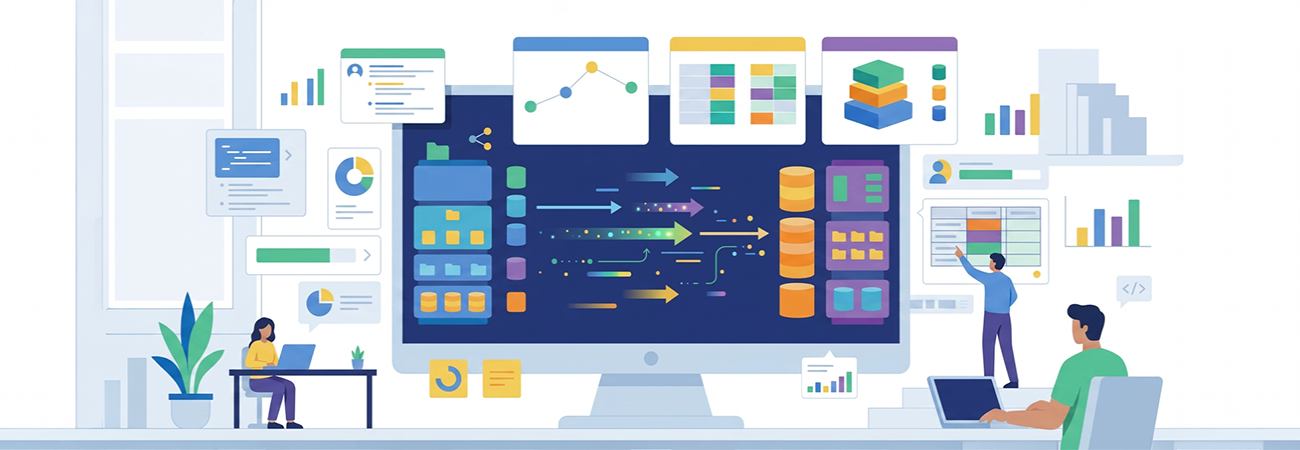
Accelerating Integration Discovery with AI
When evaluating new system integrations, one of the biggest challenges is determining whether two platforms can realistically work together—before investing time and resources into development.
For a client serving faith-based organizations with complex membership and household data structures, this challenge became especially important when assessing a new third-party membership platform export. At first glance, the data appeared structurally different and potentially incompatible with the client’s existing integration model.
The challenge extended beyond simple field matching. The client needed to understand whether the new data source could support household relationships, member synchronization, lifecycle tracking, and specialized religious data—while also identifying meaningful risks and implementation limitations.
Traditionally, this level of discovery requires extensive manual spreadsheet analysis, technical reviews, and documentation.
Using AI to Accelerate Discovery
Visus used AI-assisted workflows to dramatically speed up the discovery and planning process.
Instead of relying solely on manual analysis, we used AI to:
- Analyze large exported datasets
- Compare membership schemas
- Identify compatible and missing fields
- Detect relationship-modeling risks
- Generate structured mapping documentation
- Produce stakeholder-ready summaries
The process also surfaced valuable opportunities hidden in the data, including ministry participation, volunteer compliance tracking, emergency contacts, and sacramental history.
Most importantly, the team answered the key business question quickly:
Is this integration feasible, and what are the real risks?
The Result
What would traditionally take days of manual effort was completed in a fraction of the time.
Visus helped the client:
- Validate integration feasibility early
- Identify technical risks before development
- Reduce uncertainty around project scope
- Generate documentation and stakeholder findings quickly
Rather than spending time on repetitive manual analysis, the effort shifted toward higher-value architectural planning and strategic decision-making.
Key Takeaway
AI is not only valuable for generating code. It can significantly accelerate technical discovery, integration planning, and documentation.
The greatest impact comes when AI works alongside experienced consulting teams—helping organizations move faster, reduce uncertainty, and make better-informed technical decisions.