Challenge
An established organization wanted to strengthen its software engineering and security review process by incorporating advanced AI models into its workflow. Rather than relying on a single model, the client sought to evaluate how GPT-5.5, Claude Fable 5, and Claude Opus 4.8 could work together to identify security vulnerabilities, performance issues, technical debt, duplicated logic, configuration risks, and maintainability concerns.
The client's initial approach was straightforward: submit one broad prompt to perform a comprehensive repository review. While the analysis produced valuable findings, the request consumed a significant number of tokens and ultimately triggered a fallback from Claude Fable 5 to Claude Opus 4.8. The process proved expensive, difficult to manage, and challenging to reproduce consistently.
The real objective became finding the most effective way to coordinate multiple AI models while improving cost efficiency, consistency, and overall review quality.
Solution
Visus designed a phased, multi-model workflow that assigned each model responsibilities based on its strengths instead of asking one model to complete the entire assessment.
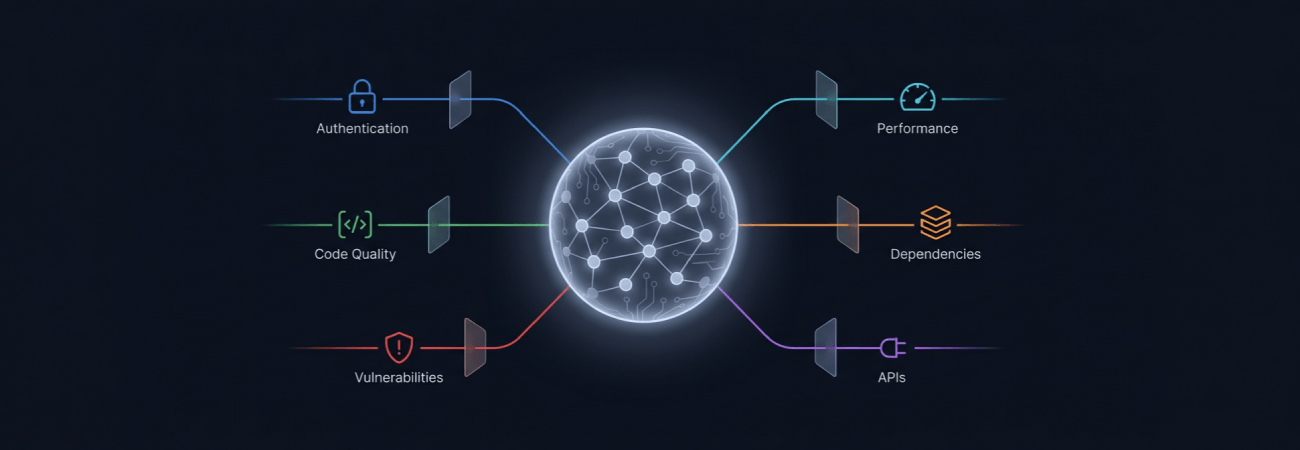
The review was divided into focused phases covering authentication, authorization, input validation, secrets management, dependency risks, API security, data access, logging, performance, resource utilization, code duplication, and maintainability.
GPT-5.5 established the review structure, refined prompts for each phase, and created a standardized reporting format. Claude Fable 5 then performed targeted security and code-quality reviews for individual areas. When broader analysis exceeded the preferred execution path, Claude Opus 4.8 completed the deeper assessment through the model fallback process.
Each review phase generated its own structured report, including identified findings, severity, supporting evidence, affected components, business impact, recommended remediation, confidence level, and potential false positives.
After completing every phase, Visus consolidated the results and used GPT-5.5 to produce two final deliverables: an executive summary for business stakeholders and a detailed technical report for the engineering team.
The team also evaluated multiple orchestration strategies by varying which model planned the work, executed the analysis, and validated the final results.
Results
The phased workflow significantly improved control over the AI-assisted review process.
Breaking the assessment into smaller, focused prompts reduced excessive token consumption and made each phase easier to validate, rerun, and audit independently. The structured workflow also provided greater visibility into which areas had been reviewed and where additional analysis was needed.
Using GPT-5.5 for planning and summarization produced more consistent reporting, while Claude Fable 5 and Claude Opus 4.8 delivered the analytical depth required for comprehensive security and code-quality assessments.
Beyond improving a single engagement, the client gained a repeatable methodology for evaluating AI models based on planning effectiveness, analytical depth, token efficiency, consistency, report quality, and the practical value of their recommendations.
Key Takeaways
Complex AI-assisted engineering workflows rarely achieve the best results by relying on a single model.
Different models excel at different stages of the process. One may produce stronger plans, another may deliver deeper technical analysis, and another may communicate findings more effectively to both technical and business audiences.
This engagement also demonstrated that larger, unrestricted prompts can increase token consumption, trigger unexpected execution paths, and make results more difficult to validate and reproduce.
A more effective approach treats AI models as specialized participants within a coordinated workflow. By dividing work into focused phases, standardizing outputs, preserving each phase as a separate artifact, and consolidating results only after analysis is complete, organizations can improve efficiency, consistency, and confidence in AI-assisted security reviews.
As organizations continue integrating AI into software engineering and cybersecurity workflows, orchestration and prompt sequencing are becoming just as important as selecting the models themselves.