Every support organization has the same dirty secret: the best answers live in ticket threads and chat transcripts, not in the official knowledge base.
We had years of rich, battle-tested solutions trapped in Zendesk and our internal chat tools. The official documentation was cleaner, better structured, and completely out of date on the messy real-world cases.
The usual response is to launch a "knowledge capture" initiative and ask agents to write articles after they solve tickets. That works for about three months until the volume of tickets overwhelms the writing capacity and the process collapses.
We took a different route. We treat the ticket and chat corpus as a continuous source of candidate knowledge, but we never let it become a second, competing knowledge base.
Here's the practical flow we landed on:
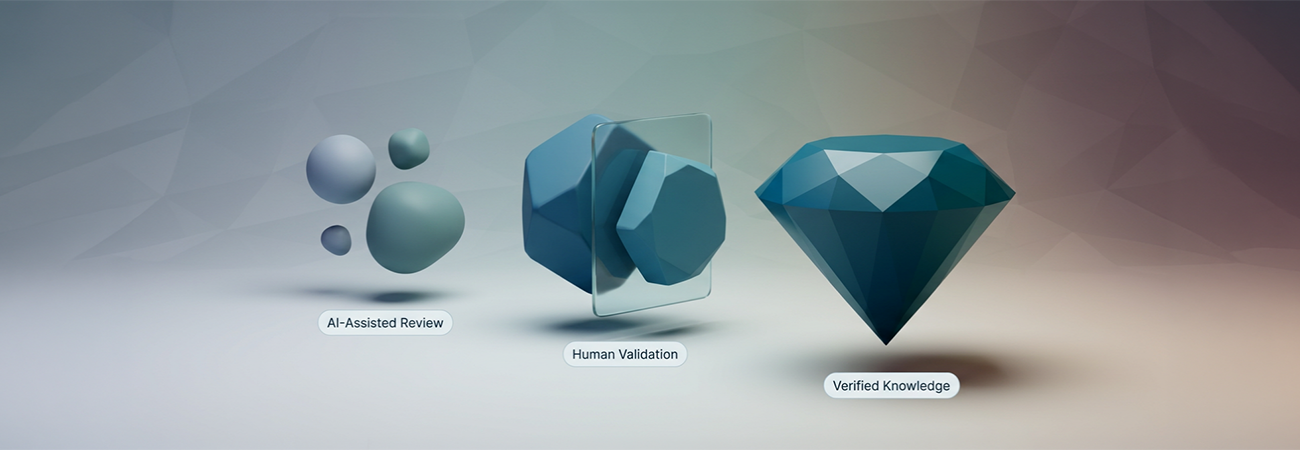
- Incoming tickets and closed chats are run through a lightweight extraction pipeline every night. The pipeline looks for threads that contain a clear problem statement and a resolution that the customer confirmed worked. Those candidates are turned into short, structured "proposed knowledge items" that include the problem summary, the steps that resolved it, any relevant product versions, and links back to the original ticket for full context.
- Those proposed items do not go live. They appear in a review queue that sits inside the same CMS the documentation team already uses. A subject-matter expert can accept the item (which creates or updates an official article), reject it, or merge it into an existing page. Accepted items are written in the official voice and structure; the original ticket stays the historical record.
- We deliberately made the extraction conservative. We would rather miss some good answers than pollute the official knowledge base with half-baked or context-specific solutions. The pipeline also strips customer-identifying information and any internal speculation that appeared in the thread.
The key design rule was simple: there is only one source of truth that the AI and the public help center are allowed to use. Everything else is raw material that has to be promoted through a human gate.
Over time this produced two useful side effects. First, the documentation team started seeing patterns they never noticed before—repeated edge cases, version-specific quirks, and workarounds that customers had invented. Second, support agents began writing slightly cleaner resolutions because they knew good ones had a realistic chance of becoming permanent knowledge.
We still have the classic "this should be in the docs" conversations. The difference is that those conversations now have a concrete artifact and a short path into the official corpus instead of dying in a Slack thread.
The knowledge base stays clean. The tribal knowledge stops being tribal. And the AI gets better answers without us maintaining two parallel systems that inevitably drift apart.