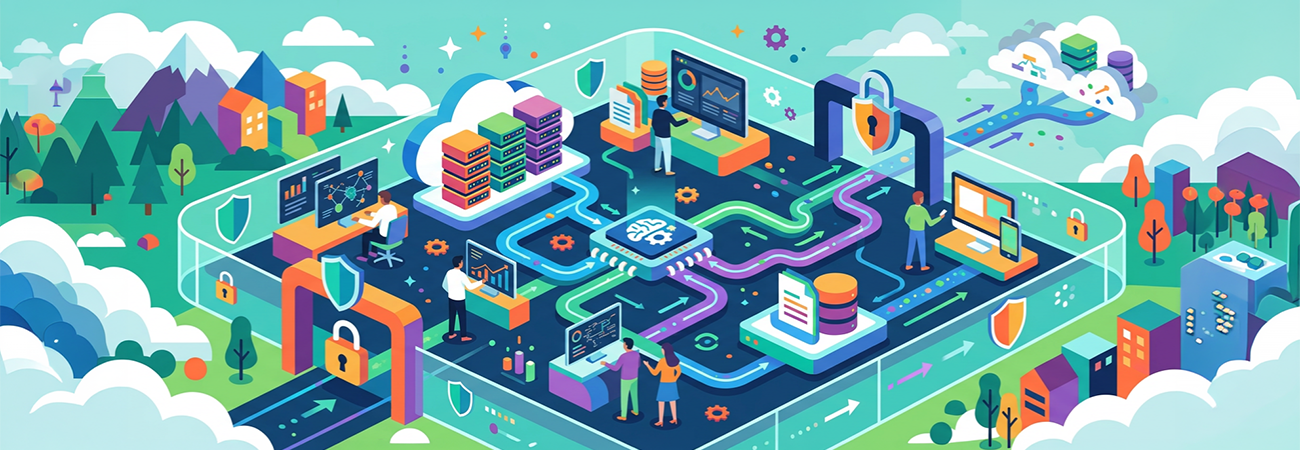
As organizations adopt AI technologies such as Azure OpenAI and Azure Machine Learning, network performance becomes increasingly important. While many teams focus on model performance and infrastructure sizing, the network path between AI services can have a significant impact on reliability, security, and overall user experience.
Many Azure AI deployments rely on public endpoints because they are easy to configure and quick to deploy. However, routing AI traffic over the public internet can introduce unnecessary latency, packet loss, and security concerns. For organizations handling sensitive data or operating under strict compliance requirements, these challenges can become even more significant.
The challenge is that private networking cannot simply be enabled after the fact without careful planning. Existing applications, services, and integrations often depend on public connectivity. Transitioning to a more secure architecture requires a thoughtful approach that minimizes disruption while maintaining service availability.
To address these concerns, Visus helps organizations implement Azure Private Link and Private Endpoints. These technologies allow Azure AI services to communicate entirely over Microsoft's private Azure backbone rather than traversing the public internet. Combined with Network Security Groups and private DNS zones, this approach creates a more secure and controlled networking environment.
The benefits extend beyond security. By keeping traffic on the Azure backbone, organizations can reduce latency, avoid internet congestion, and achieve more consistent data transfer performance. Private networking also helps eliminate common bottlenecks such as public egress limitations and firewall throttling that can negatively impact AI workloads.
As a result, AI data pipelines experience fewer interruptions, reduced packet loss, and more reliable throughput. While Private Link does not increase model speed or expand service quotas, it helps ensure that requests and responses reach their destinations more efficiently and consistently.
The key takeaway is simple: optimizing AI infrastructure is about more than the models themselves. A secure, private network foundation can improve reliability, strengthen data protection, and help organizations get the most value from their AI investments. For businesses looking to build scalable and trustworthy AI solutions, network architecture deserves a place in the conversation.